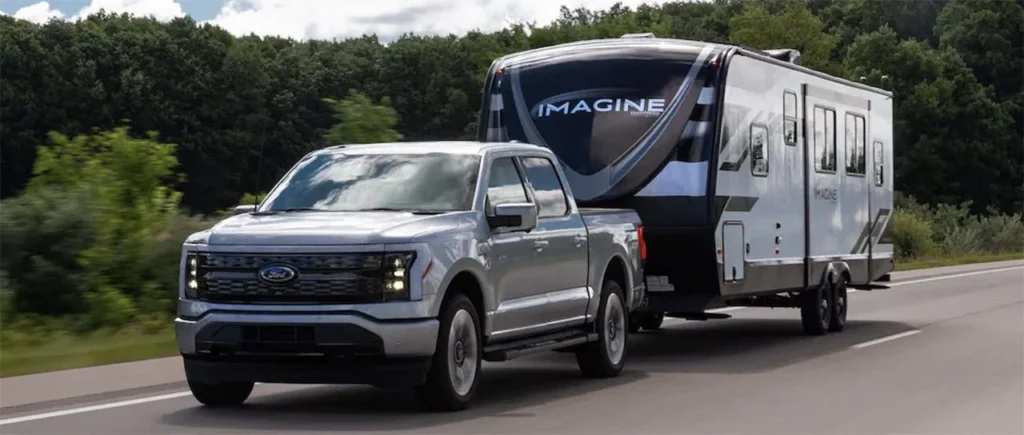
Weight distribution systems have been around for a long time, but not everyone uses them, so it might be new information if you’re just getting into towing. The benefits of a weight distribution hitch include increased stability, better handling, and improved braking power.
In general, a weight distribution hitch should be used if the trailer weighs more than half of the tow vehicle’s gross vehicle weight rating.
The following is a general guide to how these hitches work, how to install them, and where you need them. H&H Truck Accessories offers a variety of weight distribution systems and weight distribution hitches with sway control.
What Is a Weight Distribution Hitch?
Weight distribution hitches are specifically made to evenly divide the trailer weight over the wheels and frame of the tow vehicle. Normally, when you hook up a trailer to your hitch, a downward force is exerted from the trailer to the tow vehicle’s rear bumper and axle.
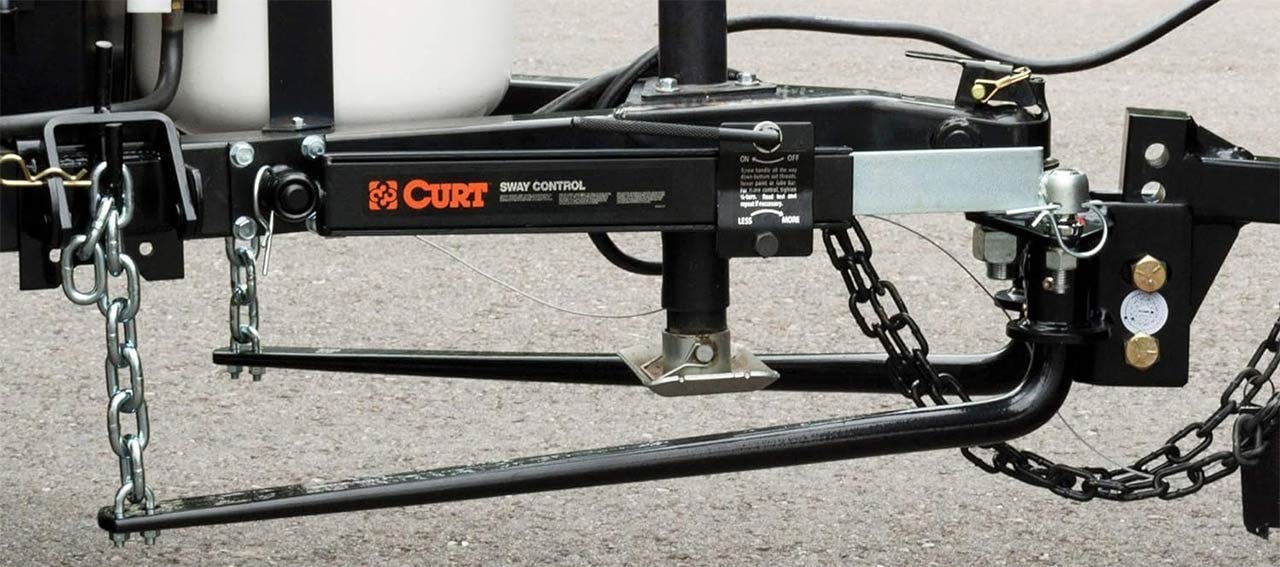
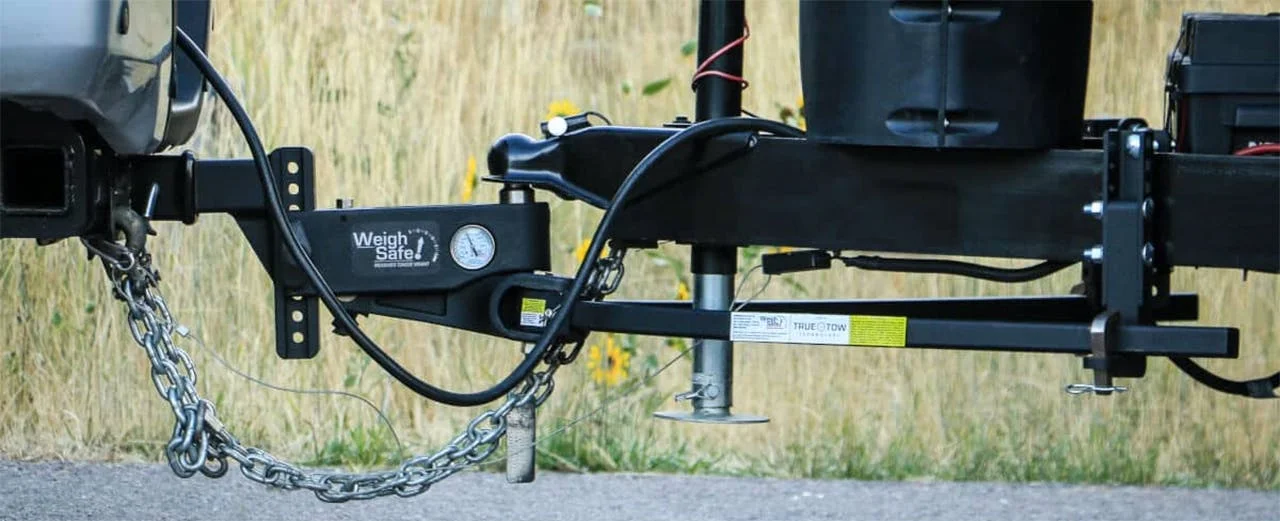
A weight distribution hitch helps mitigate this by extending the trunnion or spring arms back toward the trailer tongue. The vehicle-trailer combination with a weight distribution hitch evenly distributes the weight so that it doesn’t overload the trailer hitch and rear axle. This makes towing more level and makes the towing process smoother for the tow vehicle.
How Does a Weight Distribution Hitch Work?
The best way to understand how a weight distribution hitch works is to look at a comparison picture between a vehicle with a standard towing system and its trailer. You’ll notice that the rear of the vehicle dips slightly to the ground and similarly, the front of the trailer also dips to the ground.
With a weight distribution hitch, the picture will show a level stance and a mostly straight line from the front of the tow vehicle to the rear of the trailer. The weight of the trailer is evenly distributed to keep the trailer and vehicle level, which makes towing smoother and handling easier.
How To Install a Weight Distribution Hitch
The first step to installing a weight distribution hitch is to park your truck and trailer on level ground. Always follow any specific instructions included with your weight distribution system, but there are some basic steps that you’ll generally need to follow.
With your truck and trailer lined up, insert and secure the hitch ball. Measure the distances, then insert and mount the shank. Prepare the trailer tongue brackets and insert the spring arms.
Back your tow vehicle up and secure the coupler. Position the spring arms to the trailer tongue and adjust the weight distribution. Finally, tighten all the hardware to spec, pull in the wiring harness, and secure the safety chains.
It’s important to note that your weight distribution system will not allow you to tow more than your vehicle is rated for. You’ll need to know your gross trailer weight for adjustment purposes.
How To Adjust a Weight Distribution Hitch
Some weight distribution hitch systems also include sway control brackets. These will mount separately to the trailer tongue. The tongue weight should fall into a range of 10-15% of the trailer weight. You’ll need to adjust the tension if yours doesn’t fall in this range.
Follow any specific instructions with your weight distribution system to adjust the tension. Some systems use tension chain links, but others might use screws or an adjustment rod. Work in small increments and re-measure the vehicle after each change rather than trying to get it right in one pass.
How To Use a Weight Distribution Hitch
To make sure that your weight distribution system is doing its job, check your front and rear vehicle measurements with the trailer still loaded. Compare the measurements while loaded to the initial ones you took. The front wheel should stay at the same height with the trailer attached.
The rear wheel should be within 1 inch to 1.5 inches of the unloaded measurements with the trailer attached. If you notice that the front of your tow vehicle is pointed up with the weight distribution hitch attached, then it means you’ll need to add more tension.
If the tow vehicle’s nose points down, then the weight distribution system is too taut and you’ll need to release some of the tension.
When Do You Need a Weight Distribution Hitch?
A weight distribution hitch can be useful in just about any towing situation. However, the best time to use one is when the trailer you’re towing is significantly heavier than your tow vehicle. A weight distribution hitch will make sure that the weight of the trailer is distributed evenly so that your tow vehicle stays balanced.
Another situation where a weight distribution hitch is a good idea is if the trailer is longer than the tow vehicle. Even if it’s not significantly heavier than the tow vehicle, an overly long trailer can cause the tow vehicle to become unbalanced without a weight distribution system.
Sway Control vs. Weight Distribution Hitch
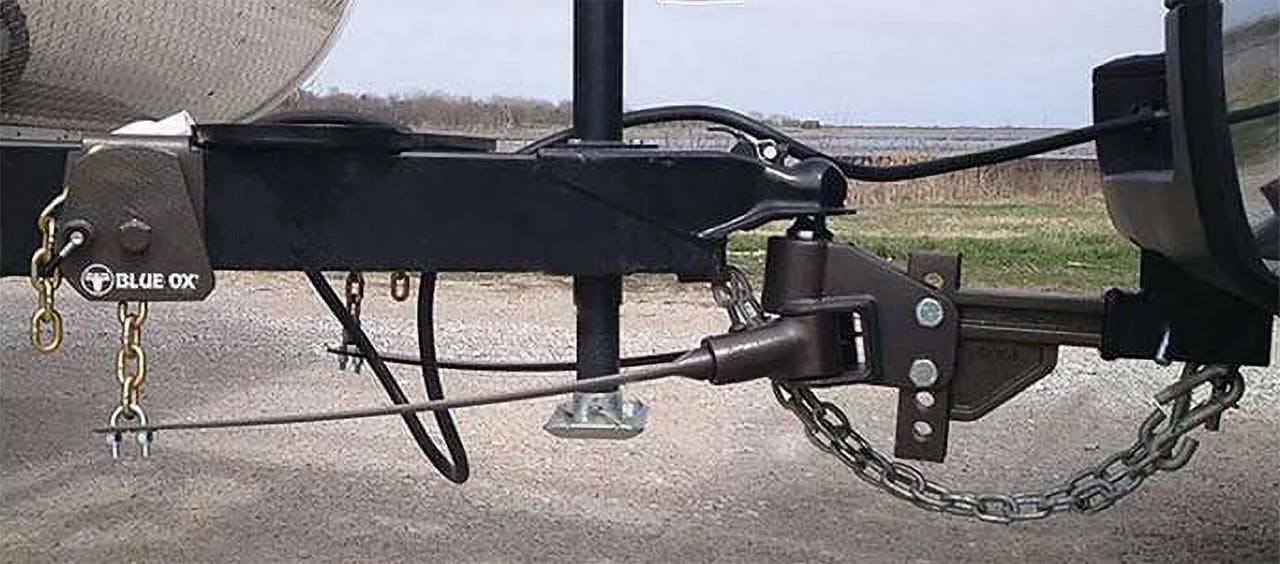
Most weight distribution hitch systems come with internal sway control and the weight distribution helps control trailer sway as well. There’s also a product called a sway control hitch. This isn’t the same as a weight distribution hitch and will only work to help control trailer sway, but it won’t evenly distribute trailer weight.
Weight Distribution Hitch Brands
There are several brands of weight distribution hitches on the market, and you’ll find many of the top brands at H&H Truck Accessories.
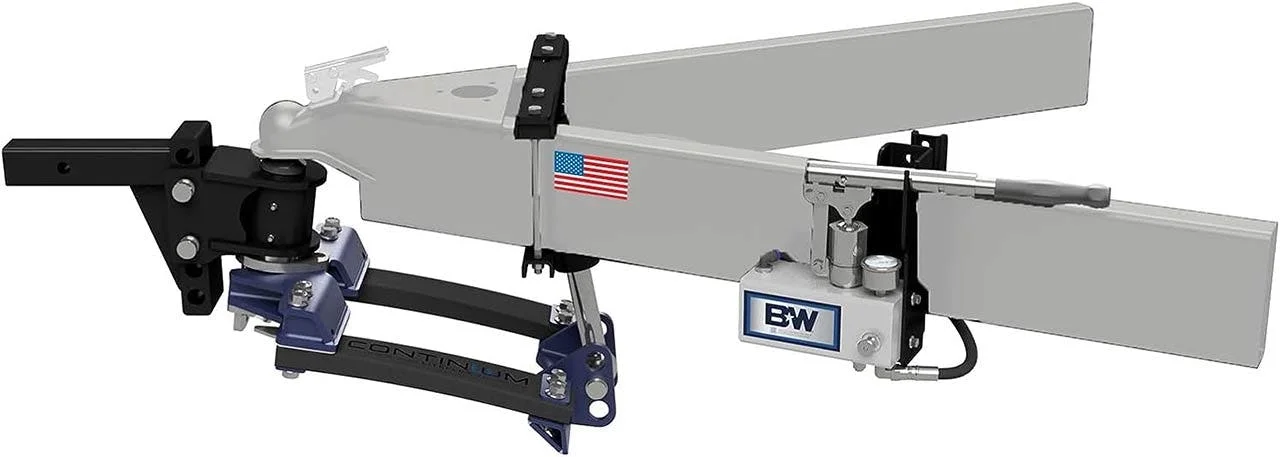
- B&W B&W Towing offers the CouplerContinuum B&W weight distribution hitch as well as various weight distribution systems that include a hitch kit and other items.
- Blue Ox The selection of Blue Ox products is even more prolific, built around the Blue Ox SwayPro weight distribution hitch. The various hitch kits are rated for different tongue weights, so make sure to check what you need in the product description.
- CURT CURT is well-known for making many different truck accessories, and its weight distribution hitches come in a range of tongue weight ratings. CURT also offers sway control kits that you can add to your purchase.
- Fastway The Fastway e2 is the one to look at if you would rather not run a separate friction sway bar. Sway control is built into the hitch: the spring arms rest on bare metal brackets, and those two steel-on-steel friction points resist side-to-side movement with nothing extra to buy, store, or unhook before you back into a campsite. Fastway builds the e2 in round-bar and trunnion versions across a range of tongue weight ratings.
Rely on H&H Truck Accessories for a solid selection of weight distribution hitches and systems, including hitches by Blue Ox, CURT, Fastway, B&W, and more. You can also find a wide variety of other towing accessories to make your towing experience safer.