
Struts vs. Shocks
Struts and shocks are key components of your vehicle's suspension system and have some of the same functions. Both parts help keep your vehicle's tires on the road.
Continued firm contact with the road is necessary for good handling, braking, and steering. Without shocks or struts, your vehicle would bounce around and handle terribly.
Shocks and struts are integral to both safety and comfort in driving a vehicle. Are they the same thing? Despite performing roughly the same function, struts and shocks are not the same thing, and most vehicles either have shocks and struts or only struts.

What Are Shocks?
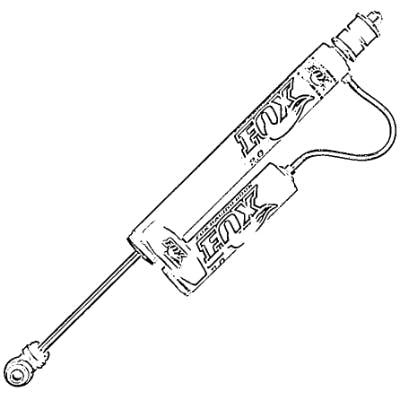
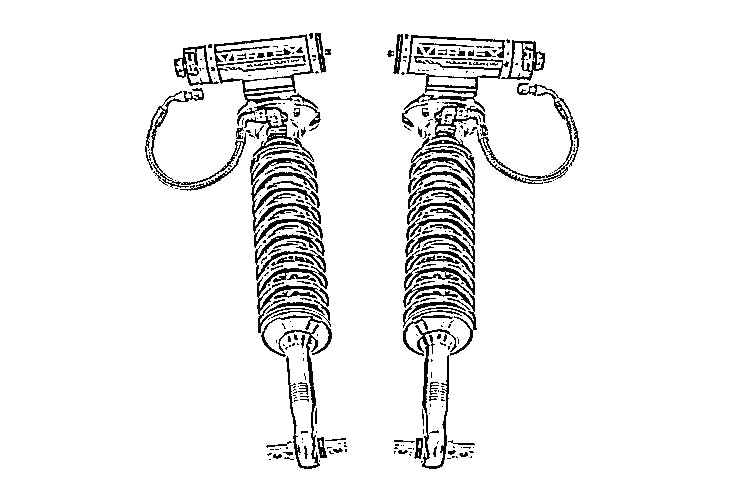
The main purpose of shocks is to control spring and suspension movement. Traditional shocks do not support vehicle weight. The amount of resistance from a shock absorber depends on the speed of the suspension and the holes in the piston.
Modern shocks create more resistance the faster the suspension moves. Shocks work by adjusting to road conditions and reducing the roll and sway of a vehicle and how much it bounces.
Shocks work rather like an oil pump. Hydraulic fluid is forced through the holes in the piston as the suspension goes up and down. The piston holes only let a certain amount of fluid pass through, which slows the piston and slows the up-and-down suspension movement.
What Are Struts?
Struts are commonly used on many modern vehicles with independent front suspensions. They're mostly found on FWD vehicles, but they can be on RWD vehicles as well.
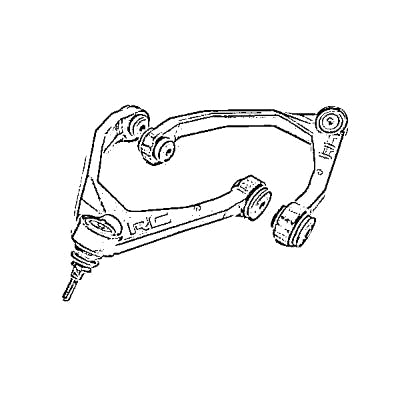
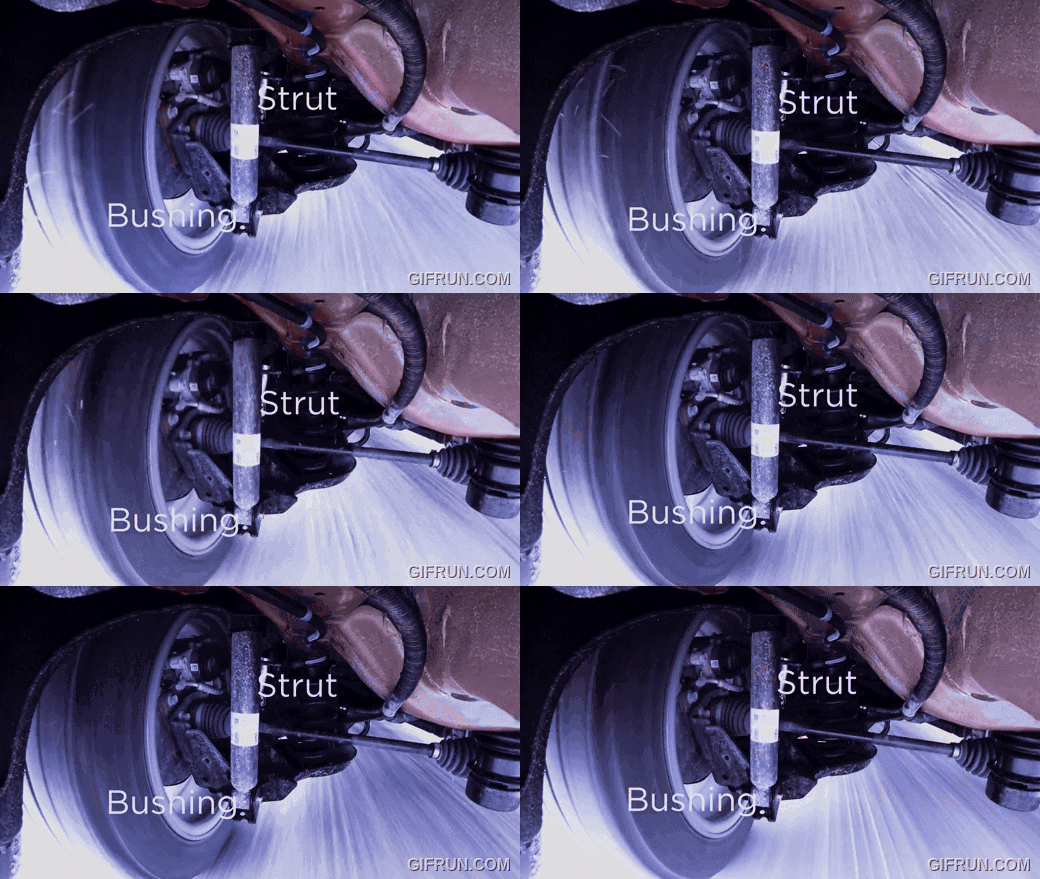
Struts are suspension structure parts that replace the upper control arm and upper ball joint of a traditional suspension. Thanks to their specific design and function, struts are lighter and smaller than shocks.
Struts serve two main purposes. One, struts perform a damping function similar to shocks. In fact, the internal makeup of a strut is almost exactly like a shock. Struts are also sensitive to the speed of the suspension.
Two, struts provide structural support for the vehicle's suspension. This is one significant way that they differ from shocks.
In other words, struts on a truck or other vehicle serve as both shock absorbers and structural support to hold the weight of the vehicle.
How Long Do Struts vs. Shocks Last?
Struts and shocks have similar lifespans. Most setups will last between 50,000 and 100,000 miles or five to 10 years. Your mileage may vary depending on a few factors.
Aggressive driving, hard braking, and regularly traversing rough roads or going off-road can cause them to wear out faster. Carrying heavy payloads or towing also does a number on your suspension.
How Much Do Struts vs. Shocks Cost?
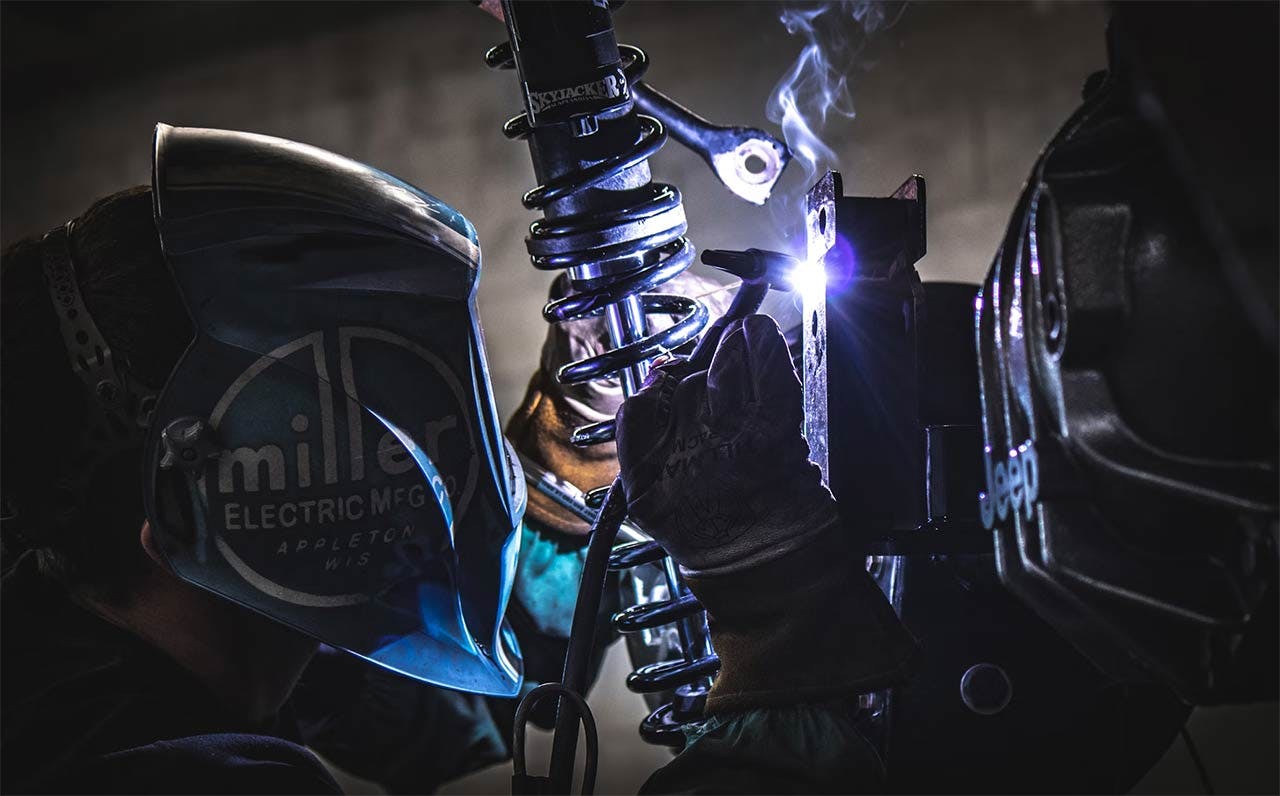
Both shocks and struts can vary in price from around $100 per shock or strut to over $500 for performance models. Shocks and struts aren't particularly easy to install and require some specialized equipment, like spring compressors.
It's usually best to get them installed by a professional, so you'll have to add that to your cost for replacing shocks or struts. As you can imagine, this can be a fairly expensive automotive repair.
How Many Shocks or Struts Are On a Truck?
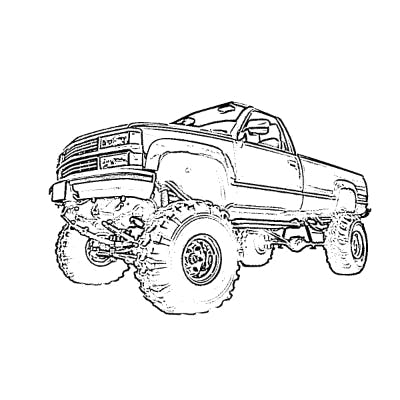
Typically, you will have a total of four shocks or struts on your truck or other vehicle. The configuration may vary depending on your vehicle. Many modern vehicles actually have struts on the front axle and shocks on the rear.
Some vehicles have four struts, two on each axle, but it's fairly rare to have four shocks. You can find out what your setup is by checking your owner's manual or looking under the vehicle if you know what to look for.
Symptoms of Bad Struts vs. Shocks
How can you tell if your shocks are bad? Sometimes it's difficult to tell because shocks and struts wear out slowly over time. You may not notice that your ride quality is deteriorating. There are a few things to watch for though.
- Is your ride bumpier or rougher than usual? If you hit a pothole and it feels like your vehicle might lose control, that's a good sign that your shocks or struts might be bad.
- Is there fluid on the exterior of your shocks or struts? If you notice fluid coming from your suspension, it might be the hydraulic fluid from your shocks or struts. When you first see it, wipe it off and drive a few more miles to ensure it's not an old oil leak or something similar. If it keeps appearing, it's probably your shocks or struts.
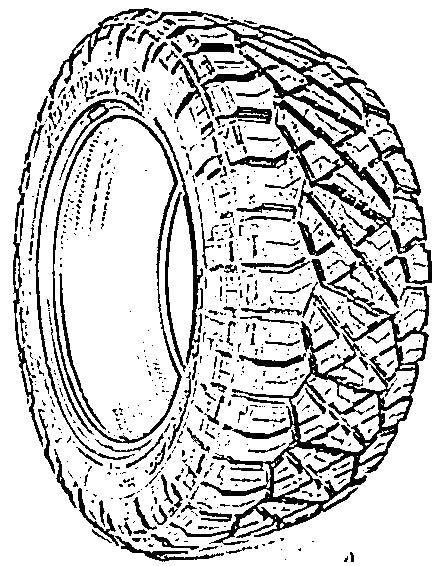
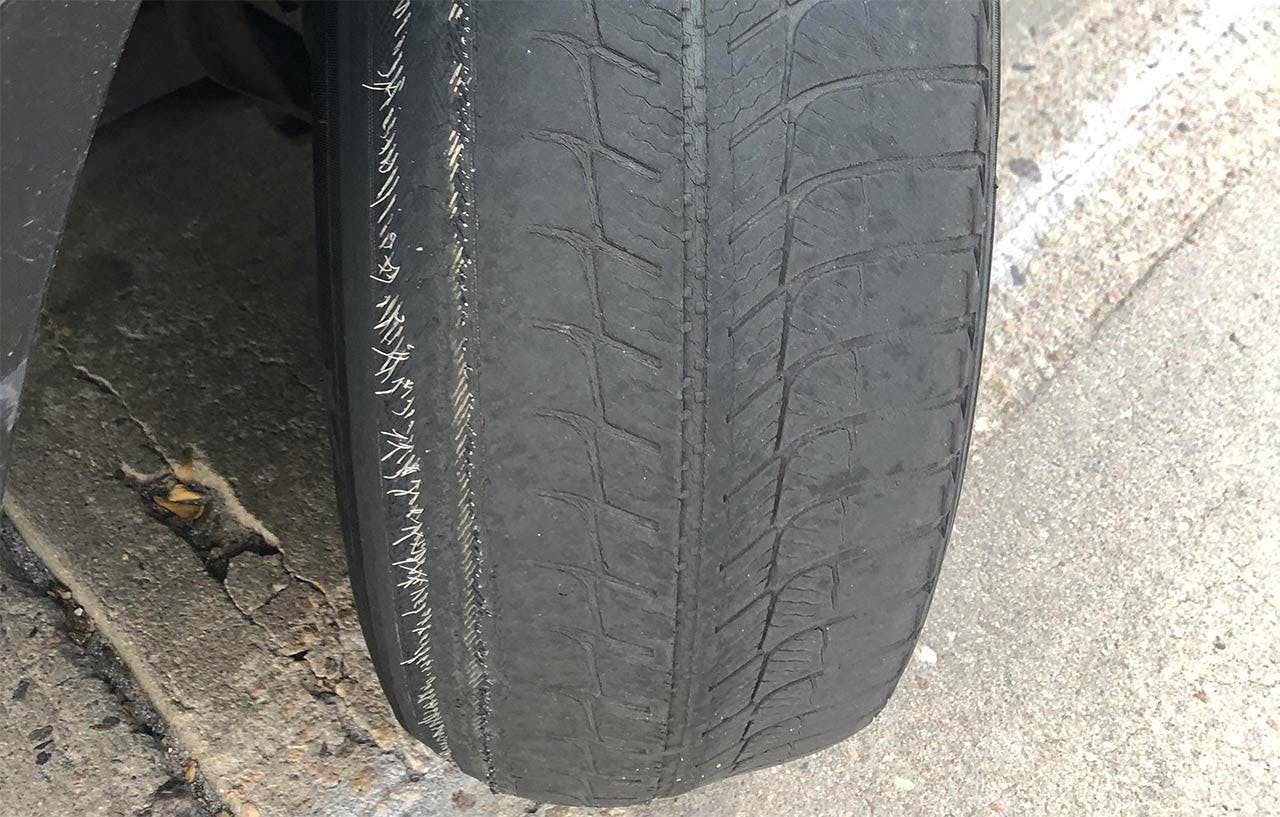
- Does your tire tread show a wavy scallop pattern? Uneven tread wear on your tires is one of the most common signs of worn shocks or struts. It's caused by the tires not maintaining good contact with the road. One of the main purposes of shocks and struts is to keep your tires in consistent contact with the road.
 Source: Reddit
- Does your vehicle feel unstable when you brake or turn? If your car nosedives when you hit the brakes or sways excessively in turns, that usually means your shocks and struts are no longer able to handle the vehicle's weight distribution.
While you can technically still drive a vehicle displaying the above signs, it's not particularly safe. You could lose control of your vehicle or underestimate your stopping distance and run into something. It's best to replace your shocks or struts as soon as you notice any of the above issues.
How Hard Is It To Install Struts vs. Shocks?
It's a fairly involved job to install struts or shocks, but struts are considered more difficult due to their more complex and integrated design. They have to be disassembled so part of the strut housing can be reused.
Remember that struts support the weight of the vehicle, which means the coil spring has to be safely compressed to remove and install the new strut.
Shocks are generally a single damping unit that doesn't support the weight of the vehicle. This makes them easier to access and replace than struts.
If you need to replace your shocks or struts, H&H Truck & Outdoor has you covered with a wide selection to choose from, but we also have you covered if you need them installed. Get professional installation on any shock or strut product at any H&H location.