
Guide to Tow Bars
There are thousands of different towing accessories on the market, but tow bars are among the simplest and most popular.
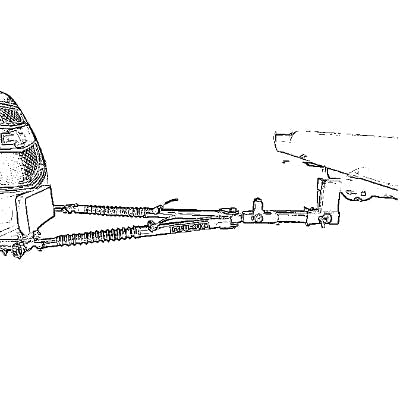
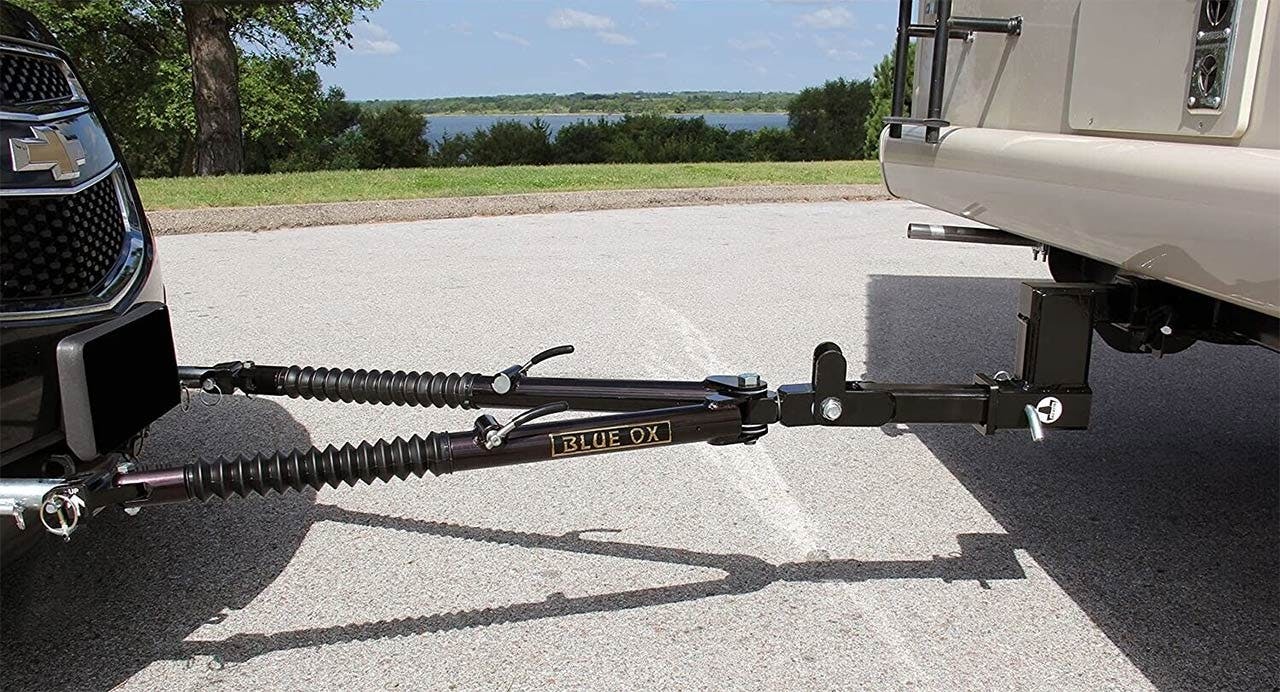
Tow bars attach to a vehicle that needs to be towed, but it doesn't lift the vehicle and all four wheels stay on the ground.
Let's take a look at what tow bars do, how they work, and how to install one.
What Are Tow Bars?
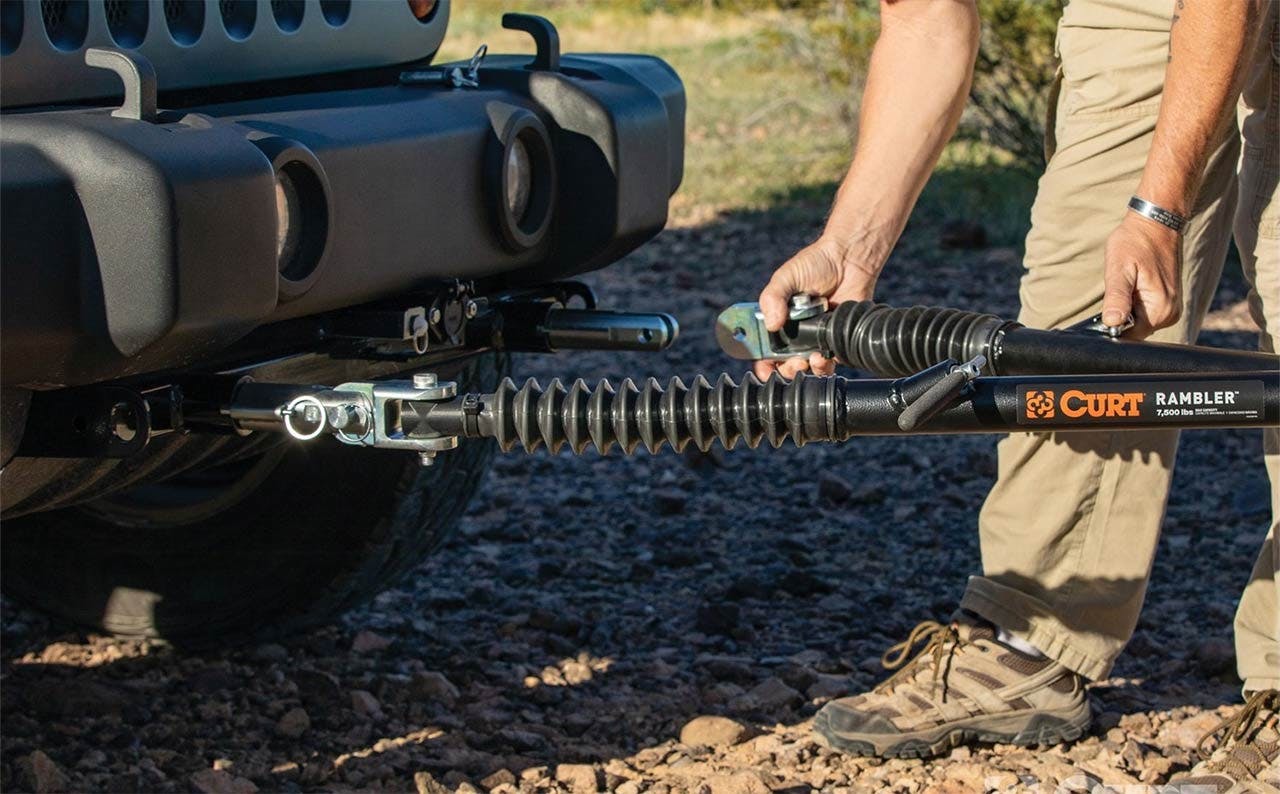
A tow bar is a bar that attaches to a vehicle that you're towing. If you buy an aftermarket tow bar, you'll usually get a base plate, wiring kit, safety cables, and a supplemental braking system.
In general, tow bars are used to tow vehicles that can have all four wheels on the ground, this usually means no automatic transmissions.
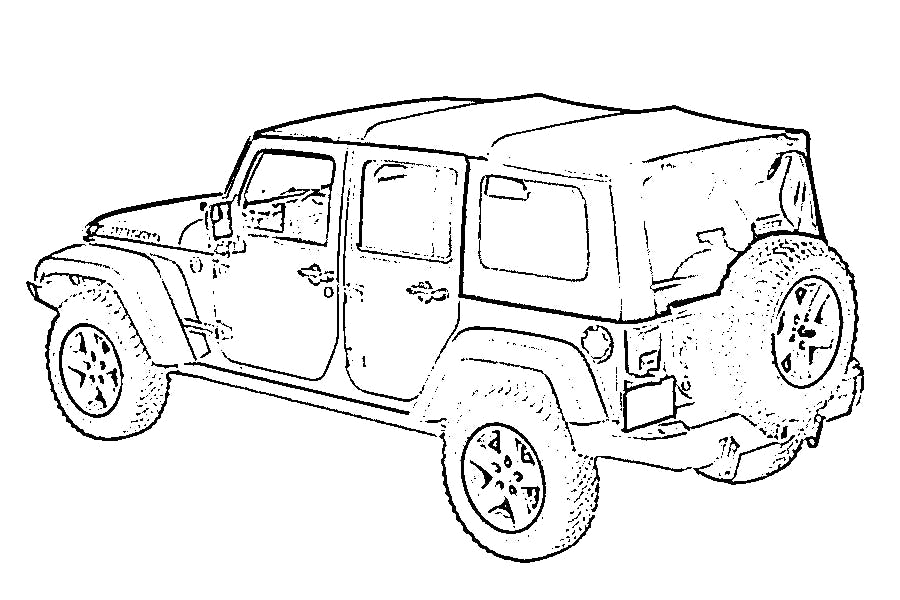
RV owners commonly use tow bars to bring a small car or SUV with them on a trip. The Jeep Wrangler is a classic RV companion vehicle that can be towed with a tow bar.
Why Do You Need a Tow Bar?
If you have a motorhome and dislike the thought of maneuvering it in a small parking lot, then towing an additional vehicle makes sense. The simplest and easiest towing option for an RV is a tow bar.
However, you'll need to make sure that the vehicle you have in mind can be towed with four wheels on the ground. Many automatic transmission vehicles cannot be towed this way.
Can You Tow Any Vehicle Using a Tow Bar?
No, not all vehicles can be towed using a tow bar. The ability to tow a vehicle with a tow bar depends on several factors related to the vehicle's transmission, drivetrain, and weight.
Here are some factors to consider:
Transmission Type
Manual Transmission: If the vehicle to be towed has a manual transmission it can be towed with a tow bar without any modifications.
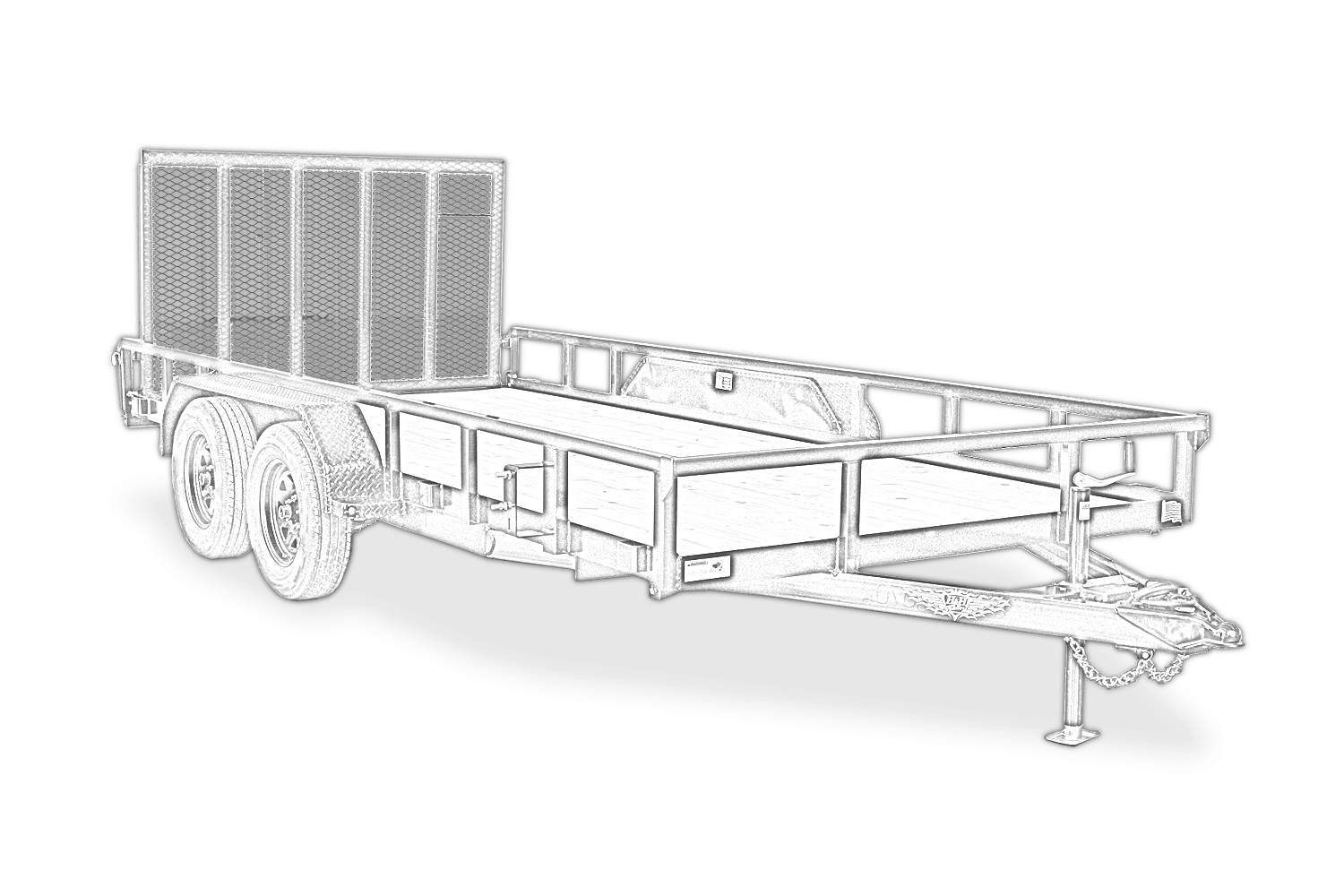
Automatic Transmission: These are more difficult to tow with a tow bar without modifications. Damage to the transmission can result due to it not being properly lubricated. For these vehicles, it’s best to use a trailer or dolly.
Type of Drivetrain
Front-Wheel Drive - In general, most FWD vehicles can be towed using a tow bar. You may need to disconnect the driveshaft or make sure it’s in “towing mode”
Rear-Wheel Drive - RWD vehicles may need to have the driveshaft disconnected to be towed with a tow bar because towing them with all wheels on the ground can cause drivetrain damage.
All-Wheel Drive / Four-Wheel Drive - Towing AWD or 4WD vehicles with all four wheels on the ground can cause serious damage unless specific steps are taken. These vehicles often require special tow procedures or modifications, such as putting the transfer case in neutral or using a flatbed or dolly.
Weight
The vehicle being towed cannot exceed the towing vehicle’s towing capacity. Going over the towing capacity strains the tow bar and is very unsafe.
Legal Requirements
Some states have legal restrictions or other requirements for towing certain vehicles. You may need a braking system for the towed vehicle, or there may be certain regulations regarding safety chains and lighting.
Additional Notes
Some vehicles have a specific "towing mode" designed for being towed. This mode may disengage certain parts of the transmission or drivetrain, allowing safe towing.
Refer to your owner’s manual for towing instructions. Some vehicles are explicitly not designed to be flat towed (with all four wheels on the ground), while others may require a modification like installing a lube pump or disconnecting the driveshaft.
Some vehicles are specifically designed to be flat towed and are often favored by RV owners. Commonly flat-towable vehicles include some Jeep models, certain trucks, and a few small SUVs or older manual-transmission cars.
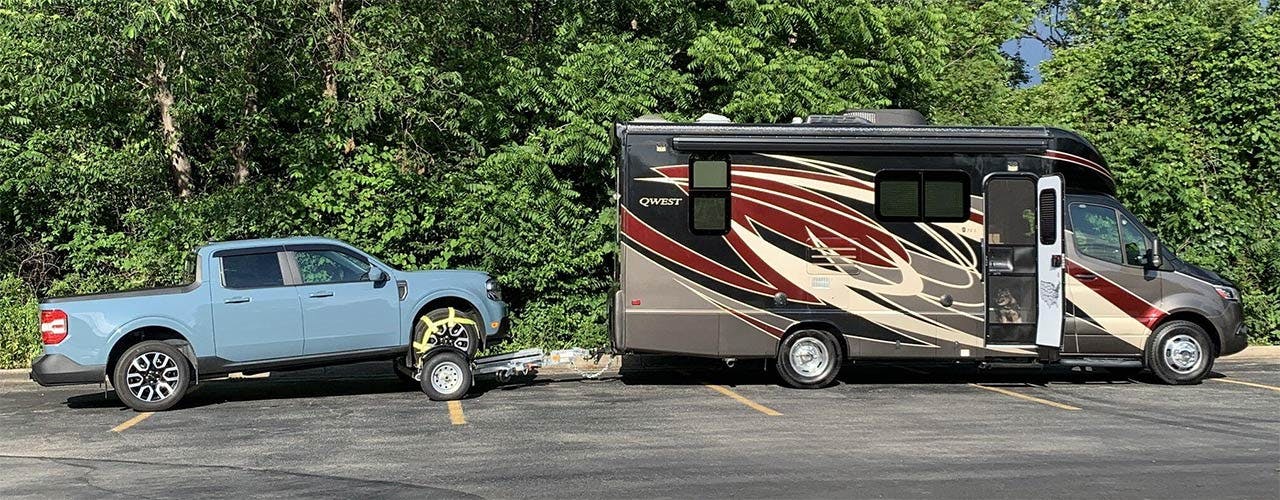
Ford Maverick on a tow dolly. Source: Maverick Truck Club
What Do You Need to Tow a Vehicle With a Tow Bar?
Assuming you have a trailer hitch attached to the vehicle doing the towing, the remaining components needed to complete your tow bar setup can vary slightly depending on the manufacturer and type of vehicle, but the most common parts include the following:
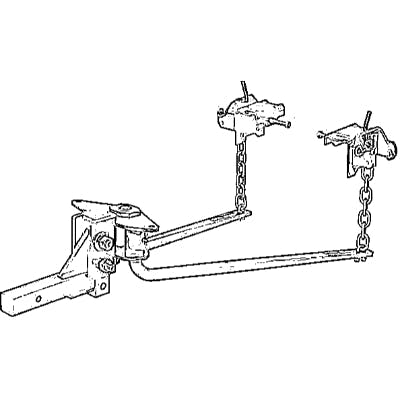
- Tow Bar - The main component that connects the two vehicles.
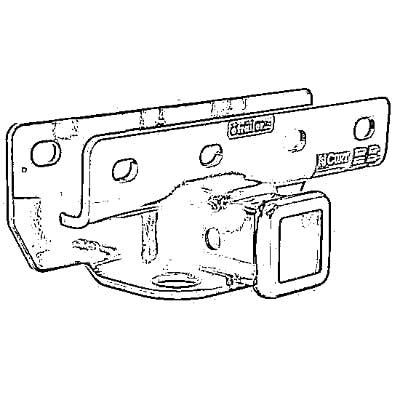
- Base Plate - Vehicle-specific mounting plate installed on the vehicle being towed. Attaches to the tow bar.
- Safety Chains or Cables - In case the tow bar fails, these are mandatory in most states.
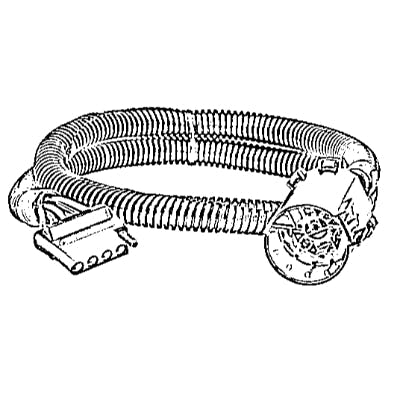
- Wiring Kit - Enables the brake lights and turn signals on the towed vehicle to work.
- Tow Bar Coupler or Hitch Ball - Connects the hitch receiver to the tow bar.
- Pins and Clips - Secures the tow bar to the base plate and the tow bar to the hitch.
- Adjustable Arms - Allows the tow bar to extend and retract. Only available in some models.
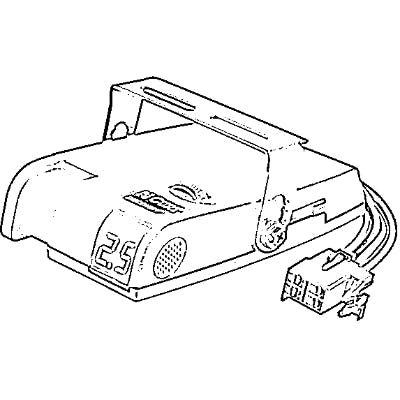
- Braking System* - Enables the vehicle being towed to use its brakes.
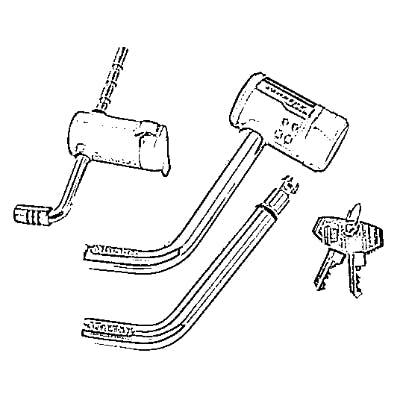
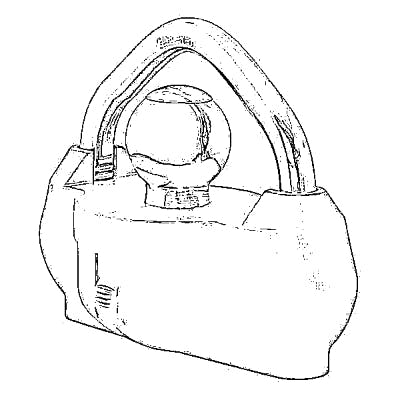
- Receiver Lock* - Secures the tow bar to the hitch receiver to prevent theft.
*optional
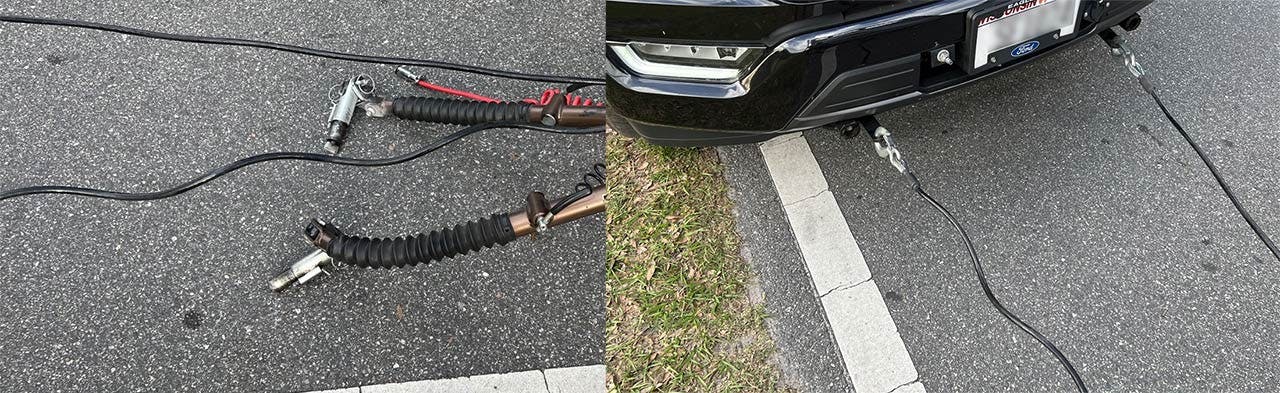
Safety cables prevented this vehicle from getting away.
How Does Steering Work When Using a Tow Bar?
A tow bar works with the towed vehicle's steering by keeping the front wheels unlocked, allowing them to turn freely and follow the towing vehicle's movements.
As the towing vehicle turns, the tow bar pulls the towed vehicle, and its front wheels naturally align with the direction of travel due to the caster angle in the steering geometry.
This ensures the towed vehicle smoothly follows through turns without dragging or skidding. The towing vehicle controls the overall direction, while the unlocked steering of the towed vehicle allows it to pivot and track properly during the tow.
How To Install a Tow Bar
Before you can use a tow bar, you'll need to install it. The good news is that hooking up a tow bar to your vehicle is pretty straightforward. Let's take a look at the process step by step.
- Start by parking your vehicle on a level surface. Apply the parking brake and ensure that there's enough distance to attach the tow bar.
- Measure the base plate height and hitch height. The difference shouldn't be any more than three inches. If you measure more than this figure, you will probably need a hitch adapter.
- Mount the tow bar shank into the towing vehicle's receiver and secure it.
- Move the tow vehicle behind the vehicle with the tow bar and get it close enough to attach the bar.
- Attach the arms of the tow bar to the base plate on the underside of the tow vehicle. Secure the arms with lynchpins.
- Once the arms are secure, set the tow vehicle in the correct gear for towing and unlock the steering wheel.
- Put the towing vehicle into Drive and move it slowly until the latches on the tow bar arms engage. Put the vehicle into Park.
- Attach the safety cables to the base plate and connect the wiring harness, plugs, and supplemental braking system.
Tow Bar Safety
All vehicles have different requirements for flat towing, so it's important to check your manual before proceeding with a tow bar setup. It's also important to let your car insurance company know about your tow bar as they may have requirements for covering an accident while towing.
You should always have the rear lights on when towing a vehicle and tow bar kits usually come with wiring kits for this purpose. Ensure that you're not exceeding the towing capacity of your vehicle as doing so raises the risk of an accident.
What Does a Tow Bar Cost?
Tow bars start at $275 and can go up as high as $2,400 but the average cost is around $1,000. The baseplate component of a typical tow bar setup is between $450 and $825.
H&H Truck Accessories stocks many popular brands, such as Blue Ox, CURT, and Demco. Look for the “add with installation” button on any product page to get professional installation at any H&H location.