
Guide to Control Arms - What You Need to Know
A vehicle's suspension system consists of shocks, springs, linkages, and control arms. Control arms are the main connection points between the frame and the front wheel assembly.
Control arms are one of the core components of a suspension system. They allow the driver to steer and guide the wheels up and down when they come into contact with the road.
Control arms are located on the front axle on each of the two front wheels. They're generally constructed of cast iron, cast aluminum, or stamped steel. Steel and iron are more for strength and durability, while aluminum is used when there's a need for lighter weight.
Let's take a look at different types of control arms, what they do, and what happens when they go bad.
Control Arm Structure and Location
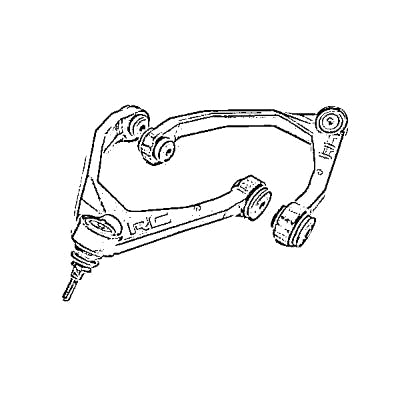
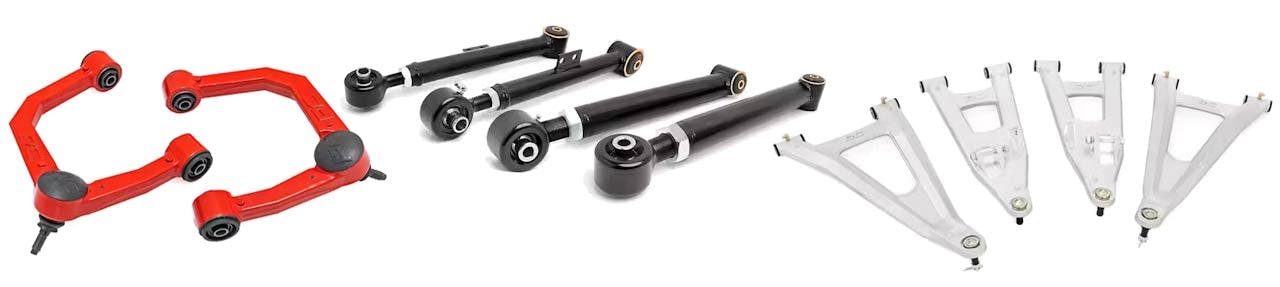
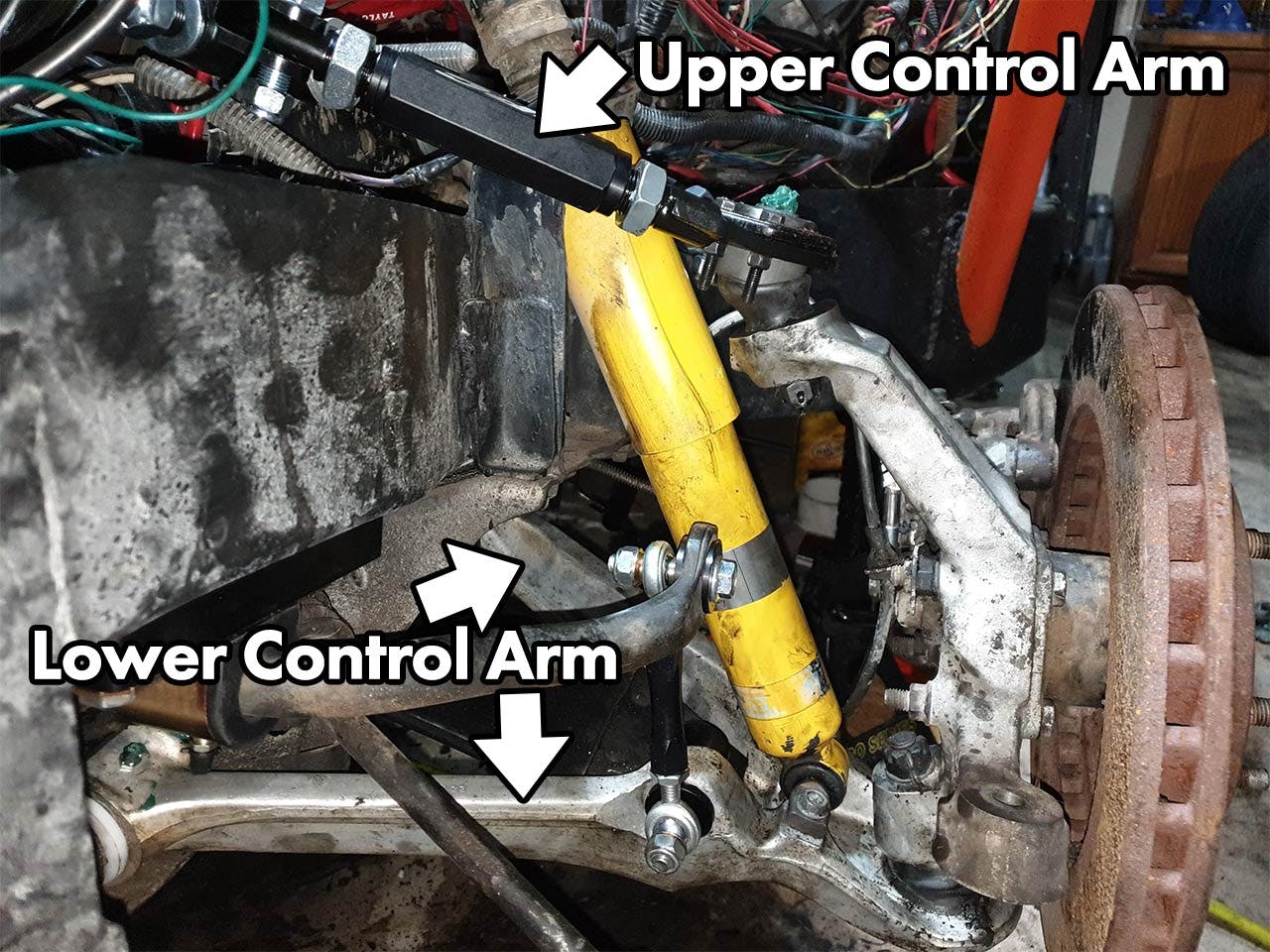
Control arm designs vary depending on the vehicle. Common shapes include the A-shape, L-shape, and the wishbone shape. The control arm's purpose is to create connection points at each end to attach the steering knuckle to the frame.
Control arms connect to the frame using bolts and bushings, with the latter serving an important role in reducing friction, vibration, and noise.
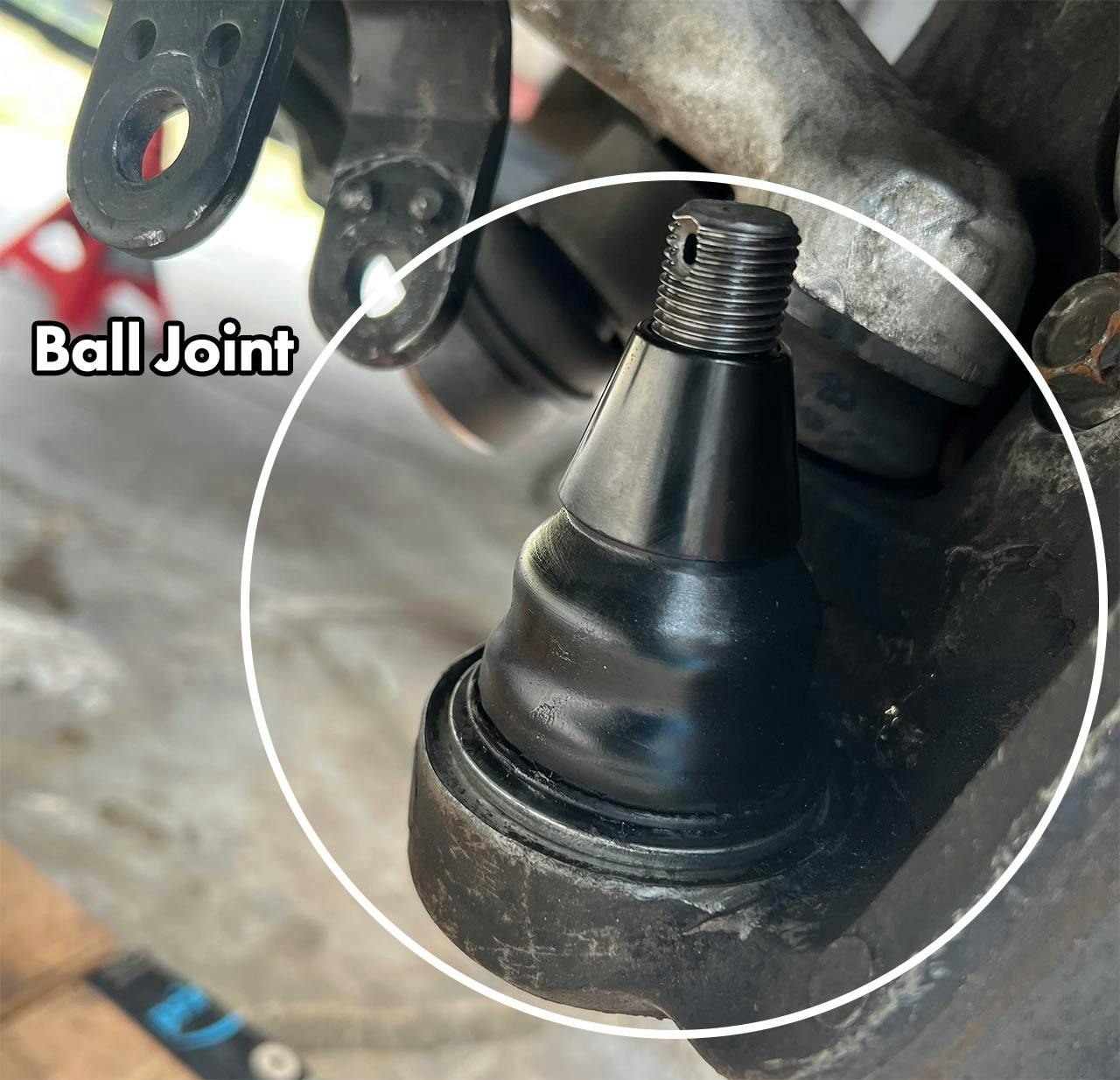
On the steering knuckle side, the control arm connects with a ball joint, allowing the wheel to move smoothly in each direction. Many vehicles employ an upper and lower control arm on the front wheels, connecting to the steering knuckle's highest and lowest points. This is considered a conventional layout.
Some vehicles have a MacPherson suspension with only a lower control arm and then a strut where the upper control arm would be. Other vehicles have independent rear suspension so they also have control arms on the rear wheels.
Source: Reddit
Control Arm Functions
The purpose of a control arm is pretty straightforward. It stabilizes the vehicle by moving the wheels and chassis together when the vehicle is in motion. Control arms coordinate the steering and the rest of the suspension.
The ball joint swivels to provide the system's pivot point while the hinge joint keeps the wheels in contact with the ground. Both parts of the control arm work together to allow the vehicle to steer and maintain stability on the road.
Source: Reddit
Control Arm Lifespan
Control arms are wear-and-tear parts, so their lifespan is limited by how much use they experience. How long they last is often dependent on the type of driving you do. If your vehicle regularly goes off-road or on rough surfaces, the control arms will absorb a lot more abuse and, thus, wear out more quickly.
Control arms can be damaged in three areas: the frame, bushings, and ball joints. Frame damage often comes from rust, breakage from a strong impact, or extreme flexing. Bushings usually get damaged slowly over time due to wear and tear. Ball joint damage also usually happens over time.
Symptoms of a Failing Control Arm
If a vehicle's control arms are failing, there are some symptoms to look out for. These include vibration, a wandering steering wheel, wobbly wheels, grinding noises, uneven tread wear, and brake fluctuations. If you have one or more of these issues, the control arms are likely wearing out. In most cases, the entire control arm assembly is replaced when parts of it start going bad.
You shouldn't drive for long on worn-out parts or bushings. Defective parts will severely compromise your vehicle's handling, which could lead to an unsafe situation. Cornering and high-speed travel are especially risky with worn-out parts. Inspecting your control arm parts regularly is important to ensure everything is working correctly.
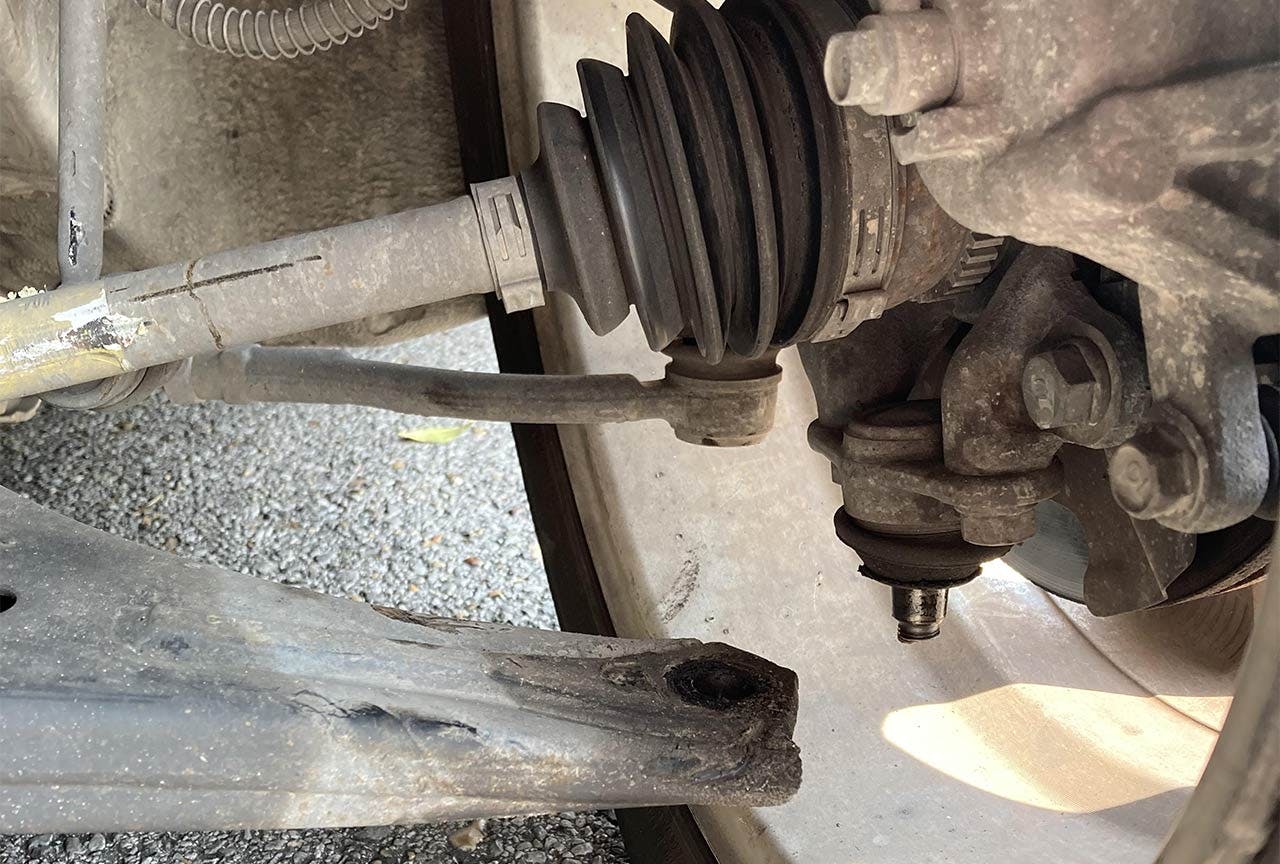
Broken control arm at the ball joint. Source: Reddit
Is It Difficult To Replace a Control Arm?
Firstly, it's common to replace the control arms in pairs. If one control arm is worn, the other is likely not far behind. The only exception is if one arm is severely damaged in a collision while the other is fine.
Depending on your mechanical experience, replacing control arms yourself can be moderately difficult. You might encounter problems such as rusted bolts and ball joints. After replacing your control arms, you will need to align the front end.
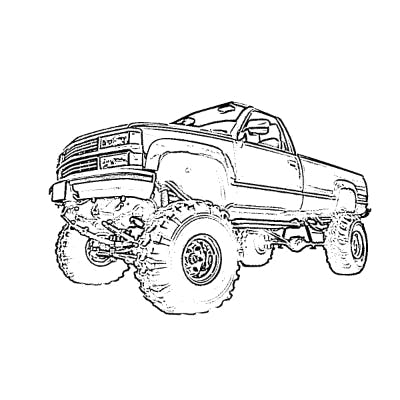
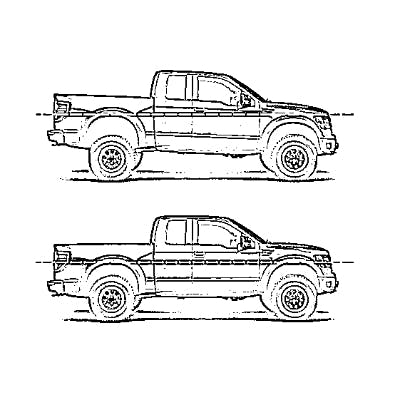
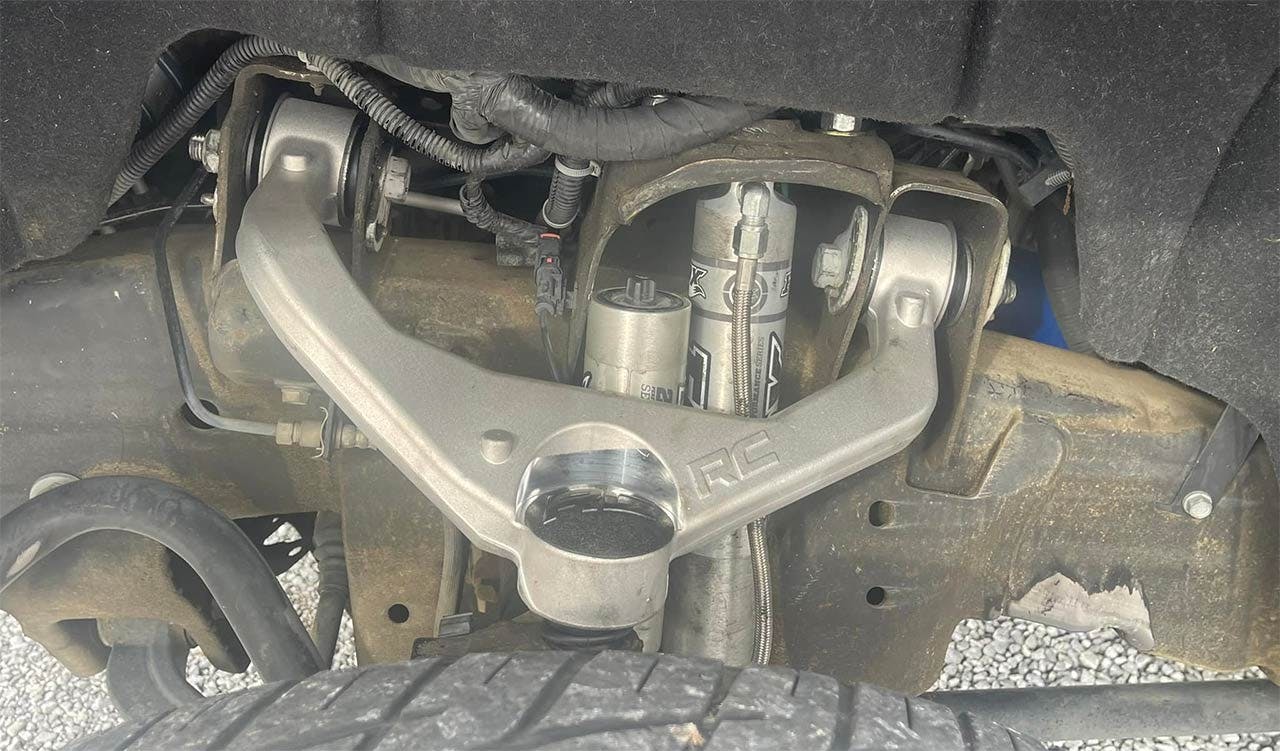
If you install a lift kit, you will often need to install new control arms at the same time. The type and size of the control arms you need generally depend on the lift kit.
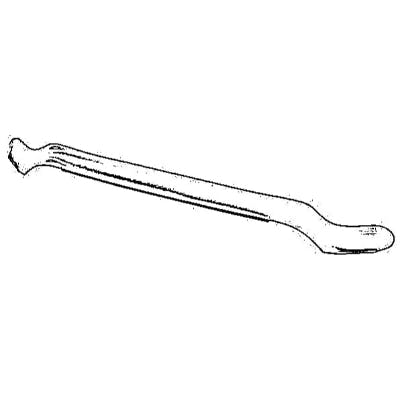
You can check your control arm bushings by using a pry bar on the control arm and gently moving it back and forth. If there is excessive movement over 1/8 inch, then the bushing is likely worn and needs to be replaced.
Cost of Replacing Control Arms
The cost of replacing control arms, including labor, is typically between $200 and $800. However, it depends on your vehicle. Lower control arms, including labor, usually cost between $500 and $700 to replace.
If you're only replacing the bushings, the cost is typically lower, between $250 and $300. Most of this cost is labor, as bushings usually cost around $50, depending on the vehicle.
Rely on H&H Truck Accessories when you need to replace your truck's control arms. We can install them at most of our locations. If you're browsing for control arms, check the fitment of your vehicle before purchasing. We stock several top brands, including Rough Country, Readylift, Fabtech, and JKS.